- Jens Biegert (ICFO – The Institute of Photonic Sciences, Spain)
- Lucia Caspani (University of Insubria, Italy)
- Giulio Cerullo (Politecnico di Milano)
- Maria Chekhova(Max-Planck Institute for the Science of Light & Friedrich-Alexander-Universität Erlangen-Nürnberg, Germany)
- Daniele Fausti (Friedrich-Alexander-Universität Erlangen-Nürnberg, Germany & Università degli Studi di Trieste, Italy)
- Michael Krüger (Technion – Israel Institute of Technology, Israel)
- Alfred Leitenstorfer (University of Konstanz, Germany)
- Maciej Lewenstein (ICFO – The Institute of Photonic Sciences, Spain)
- Mauro Nisoli (Politecnico di Milano, Italy)
- Ioachim Pupeza (RPTU Kaiserslautern, Leibniz-IPHT, Fraunhofer ITWM)
- Frank Schlawin (Max Planck Institute for the Structure and Dynamics of Matter & Universität Hamburg, Germany )
- Ron Tenne (Technion – Israel Institute of Technology, Israel)
Jens Biegert
Jens Biegert is an ICREA Professor at ICFO, where he leads experimental research in attoscience and ultrafast optics. He has pioneered mid-infrared photonics, attosecond soft X-ray science, and laser-induced electron diffraction, enabling advances in imaging chemical dynamics and carrier motion in quantum materials. He coordinates two European research consortia, is a Guest Professor at the Fritz Haber Institute of the Max Planck Society in Berlin and Research Professor at UNM in the United States. He serves on OPTICA’s Board of Directors and is Chair of its Meetings Council. He previously led Laserlab-Europe as Executive Director and served on the Board of Chairs of ARIE. Among others, he was the Organizer of Ultrafast Surface Dynamics in 2022, Ultrafast Phenomena in 2024, and is the General Chair of CLEO/Europe 2027. He has made over 550 peer-reviewed contributions and is a Fellow of the German Academic Foundation, OPTICA, and the American Physical Society, and a recipient of several awards, including an ERC Advanced Grant, the OSA Allen Prize, and the Humboldt Foundation Bessel Prize.
Lucia Caspani
Lucia Caspani has been Professor of Physics in the Department of Science and High Technology at the University of Insubria in Como, Italy, since 2024. Together with Professor Matteo Clerici, she leads the Quantum and Ultrafast Photonics Lab. She is a member of the Como Lake Institute of Photonics and the principal investigator of an ERC Consolidator Grant (2024–2029) on quantum-enhanced nonlinear imaging. Her research focuses on the generation and control of complex quantum states of light and their applications in imaging, computing, and communication. Before joining the University of Insubria, she was a Senior Lecturer at the University of Strathclyde in Glasgow. She joined the university’s Institute of Photonics as a Research Fellow in 2017, was appointed Chancellor’s Fellow in 2018, and was promoted to Senior Lecturer in 2021. During her time at Strathclyde, she collaborated with the Fraunhofer Centre for Applied Photonics. From 2014 to 2016, she was a Marie Curie International Incoming Fellow at Heriot-Watt University in Edinburgh. After receiving her PhD in Physics from the University of Insubria in 2010, she held a postdoctoral position at INRS-EMT in Montreal, where she worked on integrated quantum optics, multimode and multiphoton entanglement, and terahertz photonics.
Giulio Cerullo
Giulio Cerullo is a Full Professor with the Physics Department, Politecnico di Milano, where he leads the Ultrafast Optical Spectroscopy laboratory, and currently a Miller Visiting Professor at UC Berkeley. Prof. Cerullo’s research activity concerns on the one hand pushing our capabilities to generate and manipulate ultrashort light pulses, and on the other hand using such pulses to capture the dynamics of ultrafast events in molecular and solid-state systems. He has published over 550 papers which have received >38000 citations (H-index: 96 on Scopus). He is a Fellow of the Optical Society of America, of the European Physical Society, of the Accademia dei Lincei and of Academia Europaea and past Chair of the Quantum Electronics and Optics Division of the European Physical Society. He has been General Chair of the conferences CLEO/Europe 2017, Ultrafast Phenomena 2018 and the International Conference on Raman Spectroscopy 2024. He was awarded an ERC Advanced Grant in 2012 and an ERC Synergy Grant in 2025. In 2023, he received the Quantum Electronics Prize of the European Physical Society. He is the co-founder of two spin off companies (NIREOS and Cambridge Raman Imaging).
Michael Krüger
Michael Krueger is an Assistant Professor in the Department of Physics at the Technion – Israel Institute of Technology in Haifa, Israel, since 2019. He received his Ph.D. from the Ludwig Maximilian University in Munich, Germany, in 2013. From 2014 to 2019, he performed postdoc research at the Weizmann Institute in Rehovot, Israel. In his research at the Technion, Michael studies ultrafast quantum phenomena on the nanoscale. His main scientific achievements resulting from his Ph.D. have laid the foundation for the integration of attosecond science and nanoscience, enabling novel microscopy approaches with extreme temporal and spatial resolution. For his Ph.D. work, Michael received the Otto Hahn Medal of the Max Planck Society in 2015. For his research at Technion, he has been awarded with a Starting Grant of the European Research Council.
Alfred Leitenstorfer
Alfred Leitenstorfer obtained his PhD in Physics from Technical University of Munich in 1996. Subsequently, he worked as a Postdoctoral Member of the Technical Staff at Bell Laboratories in Holmdel, NJ. After returning to TUM in 1998, he received his Habilitation degree in Experimental Physics in 2000. From 2001 to 2002, he held a non-tenured position as an Associate Professor at LMU Munich. In 2003, Leitenstorfer was appointed Full Professor of Experimental Physics at University of Konstanz where he also heads the Center for Applied Photonics since 2004. He received the Rudolf Kaiser and Arnold Sommerfeld Prizes in 2000, the Ludwig Genzel Prize in 2010, the Kenneth J Button Prize in 2020 and the DPG Technology Transfer Award in 2023. In 2011, Alfred Leitenstorfer was awarded an ERC Advanced Grant and since 2013, he is a Fellow of the Optical Society (now Optica). His research interests comprise femtosecond technology and optical phase control, ultrafast phenomena in condensed matter as well as fundamental quantum physics at elementary scales of time and space.
Maciej Lewenstein
Maciej Lewenstein graduated with an MSc at Warsaw University in 1978 and a PhD at Universität Essen in 1983. He was a research fellow in Essen, at Harvard, Commissariat a l’Énergie Atomique in Saclay, and at Joint Institute for Laboratory Astrophysics at Boulder. He was on the faculty of the Centre for Theoretical Physics in Warsaw (1986-1994), CEA in Saclay (1995-1998), and Leibniz University Hannover (1998-2005). In 2005, he moved to Catalonia as an ICREA Research Professor at ICFO in Castelldefels. His interests include quantum optics, quantum physics, quantum information, attosecond science, and statistical physics. He is an acclaimed jazz writer and critic, author of “Polish Jazz Recordings and Beyond”. He published over 800 papers, cited in WoS (Google) over 58000 (85000) times with H-index=118 (133). He is a Recipient of 3 ERC AdGs. Listed as Highly Cited Researcher 2014-2021.
Mauro Nisoli
Mauro Nisoli is a Full Professor at Politecnico di Milano, where he leads the Attosecond Research Center and serves as co-director of the international school The Frontiers of Attosecond and Ultrafast X-ray Science. He is the author of more than 230 peer-reviewed publications in leading international journals and has delivered numerous invited lectures and tutorials at major conferences and advanced schools worldwide. He has made seminal contributions to attosecond science, particularly in the field of ultrafast electron dynamics in molecules. He co-invented the hollow-fiber compression technique, which enables the generation of few-cycle laser pulses with millijoule-level energies. He received an ERC Advanced Grant in 2009 (Electron-scale Dynamics in Chemistry, ELYCHE) and an ERC Synergy Grant in 2020 (The Ultimate Time Scale in Organic Molecular Opto-Electronics, the Attosecond, TOMATTO). In 2019, he was elected a Fellow of the Optical Society (OSA) in recognition of his pioneering contributions to attosecond science and technology, particularly the application of attosecond pulses to molecular systems.
Ioachim Pupeza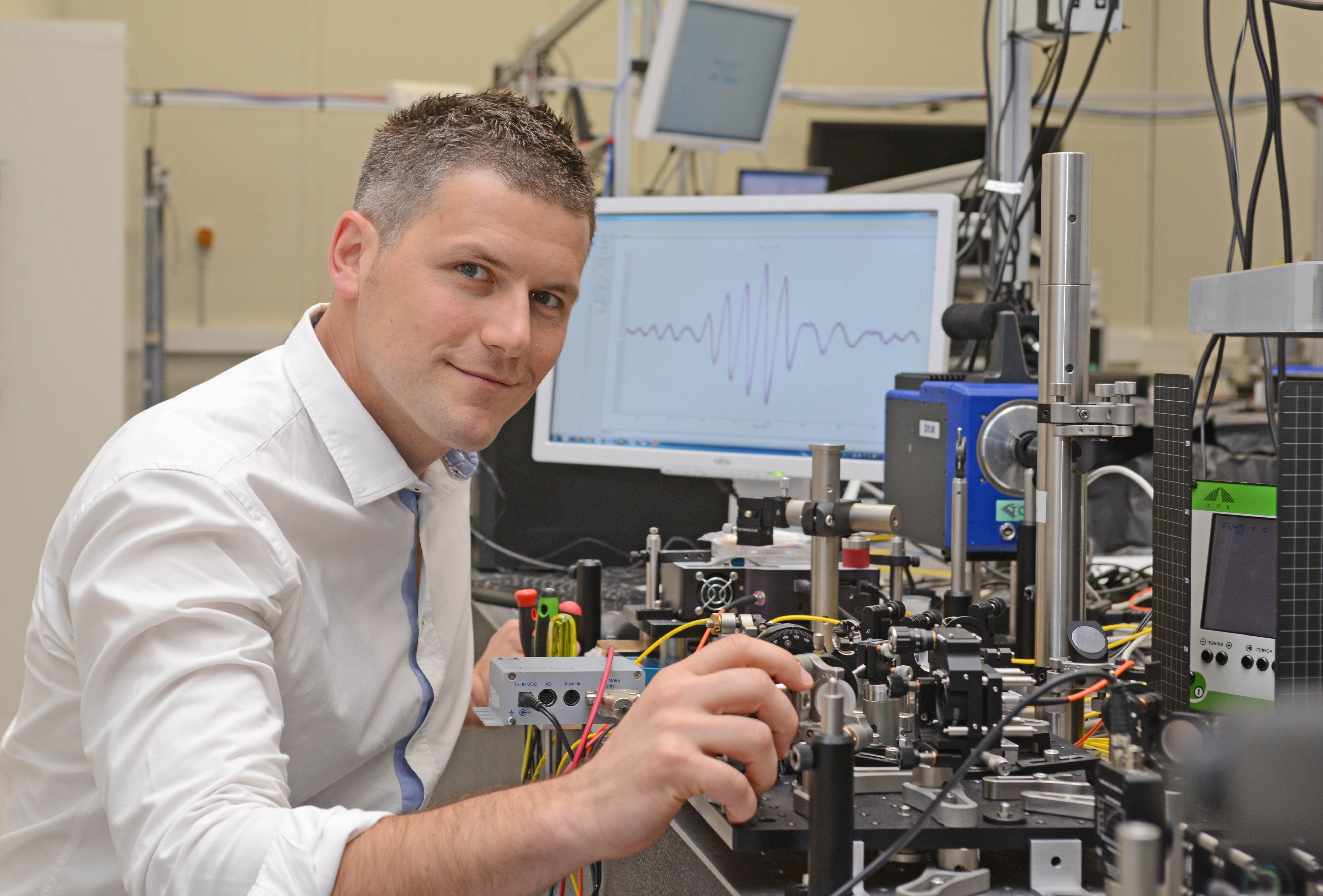
Ioachim Pupeza studied Electrical Engineering (Dipl.-Ing.) and Pure Mathematics (Dipl.-Math.) at the Technical University Braunschweig and at Harvard University as a Visiting Fellow with a scholarship of the German National Academic Foundation. He went on to pursue a PhD in Laser Physics at the Max Planck Institute for Quantum Optics (MPQ) and the Ludwig Maximilian University Munich (LMU), and graduated in 2011 with Prof. Ferenc Krausz as first and Prof. Theodor W. Hänsch as second thesis advisors. He continued as a postdoctoral fellow and research group leader at MPQ in the field of high-repetition-rate attosecond physics, in which he completed his habilitation at the LMU in 2020. In 2013/2014 he was a postdoctoral Fellow with Prof. Jens Biegert at ICFO in Barcelona, developing high-power broadband sources of waveform-stable mid-infrared radiation. Subsequently, he returned to the Laboratory of Attosecond Physics, headed by Prof. Ferenc Krausz at the MPQ and LMU, and developed electric-field-resolved spectroscopy in the mid-infrared spectral region toward high detection sensitivity and dynamic range. In 2022 he started a research group at the Leibniz Institute for Photonic Technology in Jena, in the frame of the DFG Excellence Cluster “Balance of the Mircoverse”, and in 2023 he accepted a call as a Full Professor of Experimental Physics at RPTU in Kaiserslautern, in conjunction with a research group at the Fraunhofer ITWM in Kaiserslautern. In 2023 he received an ERC Consolidator Grant, which he is implementing in Kaiserslautern and Jena, with the focus on further developing and applying high-sensitivity electric-field-resolved molecular spectroscopy for applications in biology and medicine.
Frank Schlawin
Frank Schlawin is a research group leader at the Max Planck Institute for the Structure and Dynamics of Matter and the University of Hamburg. He received his PhD from the University of Freiburg, where he started to work on the theory of quantum-enhanced nonlinear spectroscopy. He then became a postdoc at the University of Oxford, focusing on optical control of quantum materials. His contributions to quantum spectroscopy were recognized with several awards, such as the Werner-von-Siemens fellowship. His current research focuses on the application of quantum metrology to ultrafast spectroscopy and imaging, and to the use of macroscopic quantum states of light for optical control.
Ron Tenne
Dr. Ron Tenne is a faculty member in the Technion’s Chemistry Faculty. His research lies at the interface of quantum optics, nanoscience and ultrafast physics. For example, how nanoparticles can transform new non-classical states of light from paper to reality, in particular by shaping them in the time domain. In addition, he aims to apply such nano-sized objects to perform quantum sensing of events localized both in space and time. Ron earned his BSc in Materials Science and Physics from the Technion in Israel and continued for an MSc and PhD in the Weizmann Institute (Israel), working on quantum imaging and spectroscopy under the supervision of Prof. Dan Oron. In 2020, he moved to the University of Konstanz (Germany) to work in the chair led by Prof. Alfred Leitenstorfer where he worked as a postdoc and later as a group leader specializing in terahertz spectroscopy and ultrafast spectroscopy at the nanoscale. At the beginning of 2025, he joined the Schulich Faculty of Chemistry and the Diller Quantum Center at the Technion (Israel) where he holds the J Gurwin Recruitment Chair. Ron is the recipient of an ERC starting grant, the Beresheet grant from the Israeli Science Foundation (ISF) and is a member of the collaborative research center SFB1432 funded by the DFG.
Maria Chekhova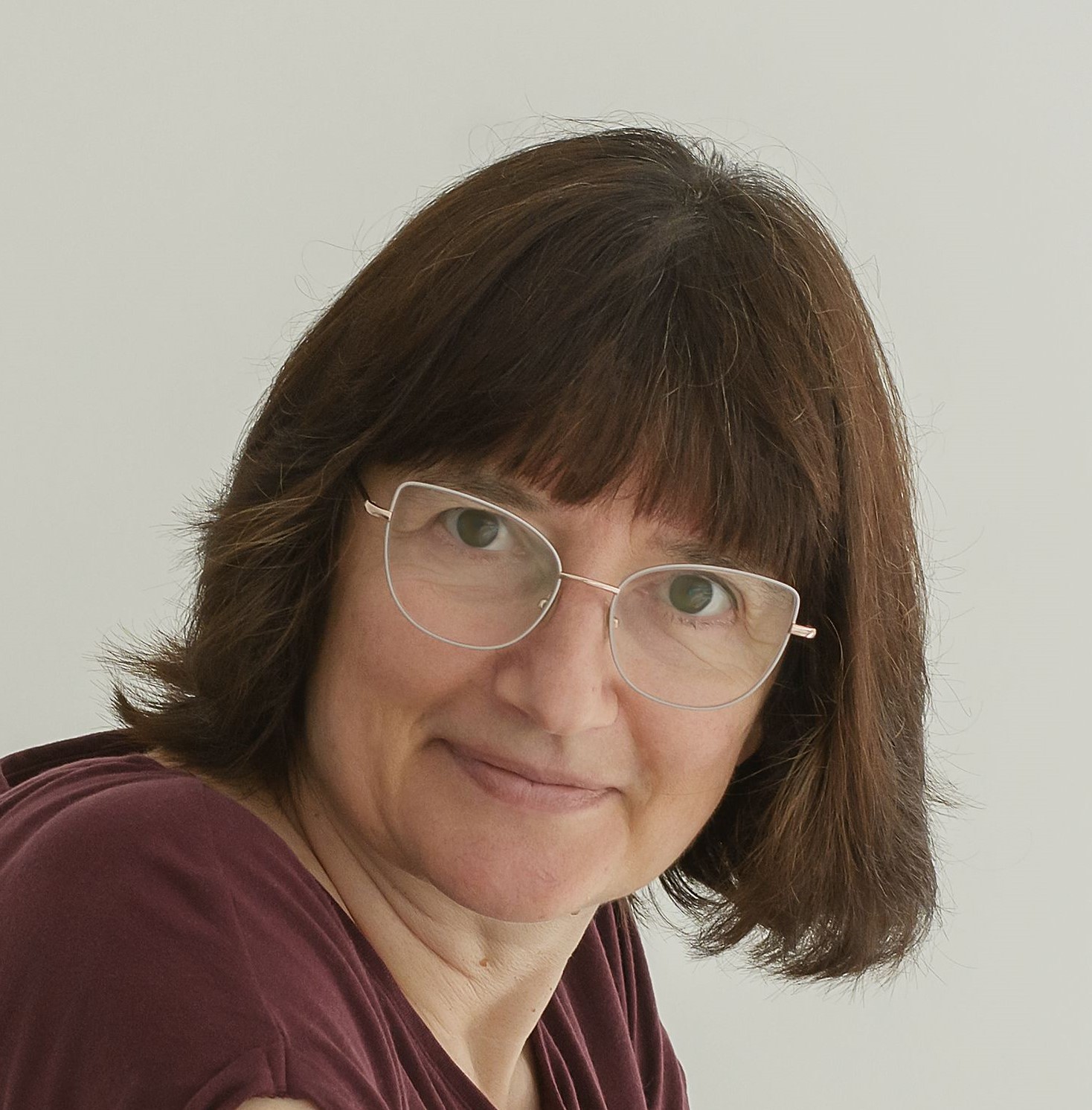
Maria Chekhova obtained her PhD at the Lomonosov University (Moscow, Russia) in 1989, then the habilitation degree in 2004, and worked there until 2009 as a researcher and a group leader. Since 2009 she leads an independent research group at Max-Planck Institute for the Science of Light (Erlangen, Germany). Her research area is generation and application of nonclassical light, with a special focus on extreme cases: bright states of light manifesting quantum behavior on the one hand and nanoscale sources of quantum light on the other hand. She is a fellow of Optica and a recipient of several awards including the ERC advanced grant.Polit